How to make a drumless track
- Drop the file. The waveform is the original mix, drums included, until the split finishes.
- Separate the song. Progress stays on this page. You can keep playing the original while it runs.
- Confirm drums are muted. Solo drums once if you want to check what was removed.
- Loop a bar, add the count-in, and practice the part against the drumless mix.
Open the song in this drum remover and separate it. This page starts in the Drummer preset: the drum stem is muted, and vocals, bass, and other stay up. What you hear is the arrangement without the kit. That is the drumless track. Export the mix as WAV or MP3 if you want to take that version into another player. The export is built here, from the stems, and the source file is not posted anywhere.
The 6-second preview is enough to learn whether the snare really landed in the drum stem. On a computer without a graphics chip, a full song can take longer than the song lasts, so the preview is the sane first step.
What stays in the track
Vocals, bass, and Other stay. Other includes the guitars and keys, so the harmony of the song is still there. You are not left with a click track unless you turn the metronome on. The drum stem itself is still available: solo it to hear the kit in isolation, which is a decent way to transcribe a fill before you mute it again and play that fill yourself.
Hits that leaked into the vocal or into Other will still tick. A brushed snare and a shaker are the usual offenders. The mute does not hunt them down.
Tips for drummers
Cymbal wash is long and bright, and a lot of it is filed outside the drum stem. If the ride is still whispering after you mute drums, lower Other a little. You will also lower guitars, so do it only on the bar you are working on, or accept a duller backing for that loop.
A half-time chorus fools people and sometimes fools the tempo estimate. If the click is racing, the BPM may be double the pulse you want to play. Count the snare you would have played, not the number on the screen. The limitations of that number are written up on the BPM and key finder.
Programmed drums usually separate more cleanly than a roomy live kit, because the transient is short and the room is small. A jazz ride recorded with the horns in one microphone will not vanish. Loop that bar anyway and play with the ghost note. Perfect subtraction is not required for practice.
What the example sounds like
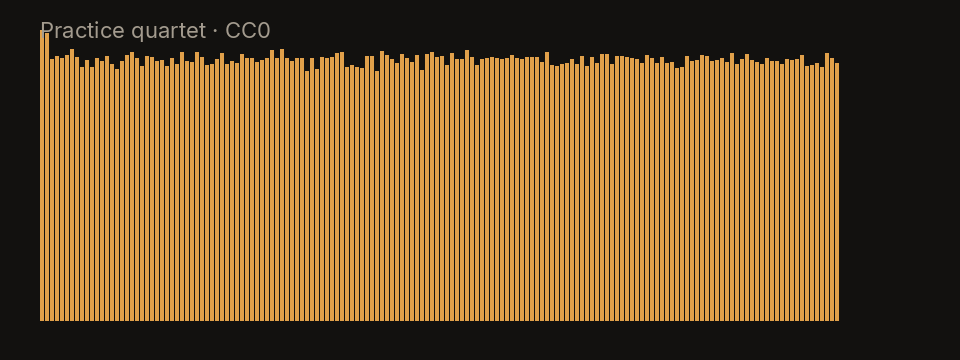
The plot is the site’s practice quartet, a 20-second CC0 synthetic mix made for this purpose, not a commercial drum recording. It has a small kit under a lead, a bass, and a plucked line. On this file the kit gathers into the drum stem, and muting it leaves the other three. A live overhead pair will not be this tidy. The plot is only a picture of a known, separable mix.
Limitations
Stomps, claps, and a snare that was sampled with a long reverb tail leave pieces behind. A drummer who sings the hook into the same microphone as the kit will lose some voice when drums are muted, or leave some kit in the vocal. You cannot ask for “kick only” or “overheads only.” There is one drum stem.
The page does not replace the drums with a better drummer. It removes the stem it has. If the song has no drums, muting the stem does almost nothing, and whatever transient noise the model gathered there goes quiet.
Practice without the kit
Set A and B around a fill, slow the loop without changing pitch, and turn the count-in on so you know where the bar starts now that the snare is gone. The speed trainer can step the tempo up after a few clean loops. Markers help if you are moving between a verse groove and a chorus figure.
If the part you want to learn is the bass against those drums, switch to the bass remover and leave the kit up. If you want the singer out so you can hear the rhythm section, start from the vocal remover instead of muting drums.